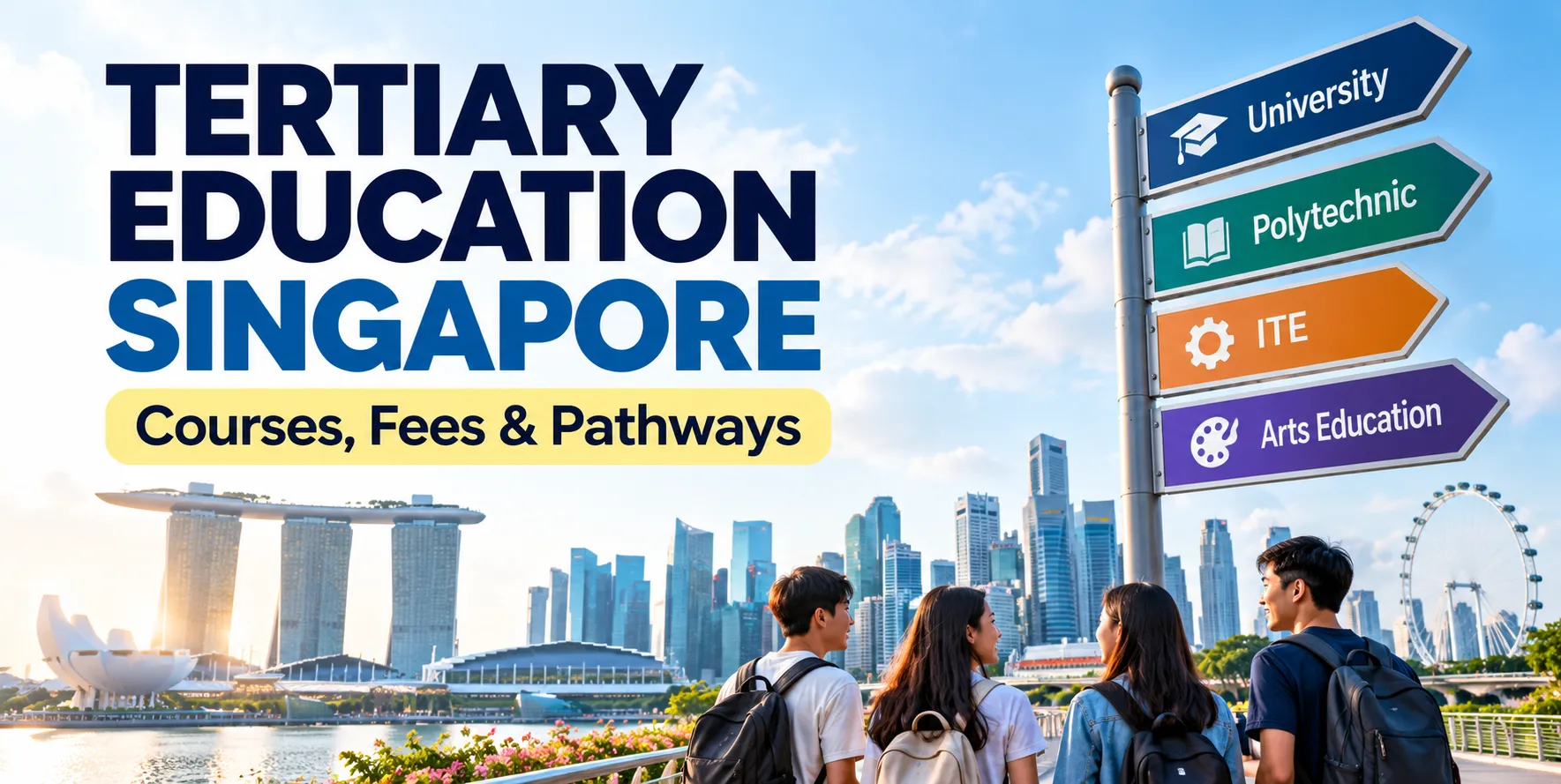
Tertiary Education in Singapore: Institutions, Courses & Entry Requirements
Singapore students have several options after secondary school, from junior colleges and polytechnics to ITE, arts institutions and universities. Each pathway offers different qualifications, learning styles and opportunities for further study or work. Understanding the Singapore tertiary education system can help students and parents compare courses, check entry requirements and plan education costs before applying. The best starting point is to look at the qualification each institution offers, the subjects or skills a student wants to pursue, and the next steps that qualification can open up.
What Is Tertiary Education Singapore?
Tertiary education Singapore generally refers to education beyond secondary school, including diploma-level, technical, vocational and degree programmes. It covers study at polytechnics, the Institute of Technical Education (ITE), universities and certain arts institutions. Junior colleges (JC) and Millennia Institute (MI) are usually described as pre-university pathways, as they prepare students for qualifications such as A-Levels or the International Baccalaureate (IB), rather than serving the same role as a university or polytechnic. The terms tertiary education and higher education are sometimes used interchangeably, particularly when discussing university and post-secondary study. In practice, the exact meaning depends on the context. Singapore’s education pathways include academic study, applied learning, technical training and creative arts education. Students can also progress from one route to another if they meet the relevant entry requirements. A diploma, for example, may support entry into selected degree programmes, while ITE graduates may qualify for further technical study or eligible polytechnic courses.
TL;DR: Tertiary Education Singapore at a Glance
- Universities: Undergraduate and postgraduate degree programmes.
- Polytechnics: Career-focused diploma courses with applied learning.
- ITE: Technical and vocational qualifications, including Nitec and Higher Nitec pathways.
- Arts institutions: Creative, design, music and performing arts education.
- JC and MI: Pre-university study before eligible university applications. Admission criteria, tuition fees and progression options depend on the institution, course, qualification and student’s background.
Types of Tertiary Education Institutions in Singapore
Universities in Singapore
Singapore’s six autonomous universities are the National University of Singapore (NUS), Nanyang Technological University (NTU), Singapore Management University (SMU), Singapore University of Technology and Design (SUTD), Singapore Institute of Technology (SIT) and Singapore University of Social Sciences (SUSS). They offer undergraduate degrees across fields such as business, engineering, computing, social sciences, health sciences, design and the humanities. Postgraduate options include master’s degrees and doctoral programmes, depending on the university and faculty. Admission is competitive for many courses. Applicants may need specific subject grades, qualifying diplomas or recognised school-leaving qualifications. Some programmes also assess portfolios, interviews, aptitude tests or relevant experience.
Polytechnics in Singapore
Singapore has five polytechnics: Singapore Polytechnic, Ngee Ann Polytechnic, Temasek Polytechnic, Nanyang Polytechnic and Republic Polytechnic. They offer diploma courses in areas such as engineering, information technology, business, health sciences, media, hospitality and applied sciences. Polytechnic learning often includes projects, practical assignments and industry exposure. Graduates may enter the workforce or apply for relevant university degree programmes. Admission to a degree course is not automatic; universities consider the diploma, academic results and any course-specific requirements.
Institute of Technical Education (ITE)
ITE focuses on technical and vocational education, helping students build practical skills for particular industries. Its programmes include Nitec and Higher Nitec qualifications, with available courses covering areas such as engineering, business, digital technology, applied sciences and services. After completing a qualification, students may seek employment or apply for eligible further-study routes. Progression depends on the qualification earned, academic performance and the entry rules for the next course.
Arts Institutions, Junior Colleges and Millennia Institute
LASALLE College of the Arts and the Nanyang Academy of Fine Arts (NAFA) provide specialist education in areas such as fine arts, design, music, theatre and related creative fields. Available qualifications and progression routes differ by programme. JC students generally prepare for the A-Level examination, while MI offers a three-year pre-university route leading to A-Level examinations. These pathways are commonly chosen by students planning to apply for university after meeting the relevant requirements.
| Institution type | Main focus | Typical qualification | Possible next step |
|---|---|---|---|
| Universities | Academic and professional study | Bachelor’s, master’s or doctoral degree | Employment or further study |
| Polytechnics | Applied and industry-focused learning | Diploma | Employment or eligible degree programme |
| ITE | Technical and vocational skills | Nitec or Higher Nitec, depending on course | Employment or further qualifications |
| Arts institutions | Creative and performing arts | Qualification varies by programme | Arts-related work or further study |
| JC/MI | Pre-university academic preparation | A-Level or other programme-specific qualification | University applications, subject to eligibility |
Tertiary Education Pathways After Secondary School
Which Pathway Should Students Consider?
There isn’t one route that suits every student. The choice depends on academic results, preferred subjects, learning style and future plans. Some students prefer classroom-based academic study; others learn better through practical projects or hands-on training.
| Pathway | Main focus | Possible progression |
|---|---|---|
| JC/MI | Pre-university academic study | University applications, subject to entry criteria |
| Polytechnic | Applied learning and industry projects | Employment or eligible degree programmes |
| ITE | Technical and vocational training | Work, Higher Nitec or eligible diploma programmes |
| Arts institution | Creative and performing arts | Further study or arts-related careers |
JC and MI can suit students who want to study A-Level subjects before applying to university. Polytechnic courses are often a good fit for students who already have an area of interest, such as business, engineering, media or information technology. ITE offers practical training linked to occupational skills, while arts institutions focus on creative disciplines. And these routes aren’t necessarily dead ends. Students may continue studying after gaining a qualification or work experience, provided they meet the next institution’s entry criteria. Check course-specific requirements before deciding, rather than relying on general assumptions about which route leads to a degree.
Tertiary Education Admission Requirements in Singapore
Local Student Admissions
Admission requirements depend on the institution and course. Singapore students may use routes such as the Joint Admissions Exercise (JAE), Early Admissions Exercise (EAE), or other course-specific application schemes. JAE is used for eligible applicants applying to participating JC, MI, polytechnic and ITE courses, while EAE can consider a student’s demonstrated aptitude and interest as well as academic eligibility. Each exercise has its own dates and conditions. Check the required subjects, grades, aggregate score and any portfolio or interview requirements before submitting an application. Previous admission scores can offer a rough reference, but they don’t guarantee a place in the next intake.

International Student Admissions
International applicants should check whether their school-leaving qualification is accepted for the programme. Depending on the course, they may need academic transcripts, proof of English proficiency, identification documents, a portfolio or additional assessments. Requirements differ between universities, polytechnics and private or arts institutions. How do I apply for tertiary education Singapore? First, shortlist suitable courses, review the entry criteria and application period, then submit the required documents through the institution’s designated process. International applicants should also check immigration requirements early.
Tertiary Education Fees, Scholarships and Financial Aid
How Much Does Tertiary Education Cost?
Tertiary education fees in Singapore vary by qualification, institution, course and student status. Tuition is only part of the budget; accommodation, transport, meals, equipment, insurance and other student charges may add to the total. For a concrete example, NUS lists subsidised annual tuition fees for its undergraduate Law intake in Academic Year 2026/27 as follows. These figures apply to that programme and intake, not to all university courses.
| NUS Law undergraduate intake, AY2026/27 | Annual tuition fee |
|---|---|
| Singapore Citizen | S$12,750 |
| Singapore Permanent Resident | S$17,800 |
| International student from ASEAN | S$27,750 |
| International student from outside ASEAN | S$30,450 |
Financial Support for Students
Students may qualify for government subsidies, bursaries, scholarships or education loans. Eligibility depends on factors such as citizenship, household income, academic results, course type and whether the student accepts a tuition grant.
| Financial support | Purpose | Who may qualify |
|---|---|---|
| MOE Tuition Grant | Reduces eligible tuition fees | Eligible students in participating programmes; conditions apply |
| Government bursaries | Helps students from eligible lower-income households | Eligible students at participating institutions |
| Scholarships | Supports study based on specified criteria | Depends on award, academic merit and other conditions |
| Higher Education Student Loan | Helps finance eligible study costs | Eligible students in approved programmes |
Singapore Citizens generally receive the highest level of MOE Tuition Grant subsidy in eligible programmes. Permanent Residents and international students may need to apply, and some grants carry a service obligation after graduation. Read the conditions before accepting financial support.
Tertiary Education Singapore for International Students
International students can apply to Singapore institutions if they meet the academic and programme-specific entry requirements. Accepted qualifications, English-language requirements, tuition fees and available financial aid vary by institution. Applicants should prepare their school transcripts and other requested documents early, especially if certified copies or official translations are required. Foreign students accepted into an eligible full-time course generally need a Student’s Pass unless they hold a qualifying immigration pass or fall under an exemption. The application process depends on the type of institution, so confirm the current requirements with the Immigration and Checkpoints Authority (ICA) and the institution before making travel plans.
Frequently Asked Questions About Tertiary Education Singapore
What Is Considered Tertiary Education Singapore?
It generally includes education after secondary school at polytechnics, ITE, universities and certain arts institutions. JC and MI are usually classed as pre-university pathways because they prepare students for further academic study.
Is Polytechnic Considered Tertiary Education?
Yes. Singapore polytechnics offer diploma programmes with applied learning, projects and industry exposure. Graduates can apply for jobs or eligible degree courses, depending on the diploma and university’s admission criteria.
What Comes After Secondary School in Singapore?
Students may consider JC, MI, a polytechnic, ITE or an arts institution. The available options depend on their qualifications, results, interests and eligibility for the chosen programme.
Can I Go to University After ITE?
It may be possible. ITE graduates can progress through eligible further-study routes, including relevant diploma programmes. University entry depends on the qualification earned, academic results and the degree programme’s requirements.
How Much Does Tertiary Education Cost in Singapore?
Fees vary by institution, course, qualification and student status. Government tuition subsidies, bursaries, scholarships and loans may reduce the amount payable for eligible students. Check the current fee schedule for the exact course and intake.
Can International Students Study in Singapore?
Yes. International students may apply if they meet the institution’s admission requirements. They should also check tuition fees, English-language criteria and whether a Student’s Pass is required for their course.
Choosing a Tertiary Education Pathway in Singapore
Singapore offers academic, technical, vocational and creative routes for students after secondary school. Compare the qualifications offered, course content, entry requirements, fees and future study options before making a choice. Students and parents should check current admissions dates and fee schedules directly with the relevant institution, since requirements can change between intakes. A suitable pathway is one that matches a student’s interests, academic background and plans.