Dumpling Festival: History, Meaning, Traditions and Celebrations in Singapore
The Dumpling Festival is a traditional Chinese celebration observed on the fifth day of the fifth month of the lunar calendar. Also known as the Dragon Boat Festival or Duanwu Jie, it brings together centuries-old customs, rice dumplings and exciting boat races. The festival is closely linked to the story of Qu Yuan, a respected Chinese poet whose legend remains part of the occasion. In Singapore, Chinese families mark the day by enjoying bak chang, sharing traditional foods and keeping cultural customs alive across generations.
TL;DR: Dumpling Festival at a Glance
The Dumpling Festival, also called Duanwu Jie, is a traditional Chinese celebration held on the fifth lunar month’s fifth day. It remembers the legend of Qu Yuan through zongzi (rice dumplings), dragon boat racing and family traditions. In Singapore, bak chang is a familiar part of the celebration.
| Festival detail | Information |
|---|---|
| Festival name | Dumpling Festival |
| Other names | Dragon Boat Festival, Duanwu Jie |
| Chinese name | 端午节 |
| Date | Fifth day of the fifth lunar month |
| Traditional food | Zongzi / Bak Chang |
| Historical figure | Qu Yuan |
| Main activity | Dragon boat racing |
| Cultural origin | Ancient China |
What Is the Dumpling Festival?
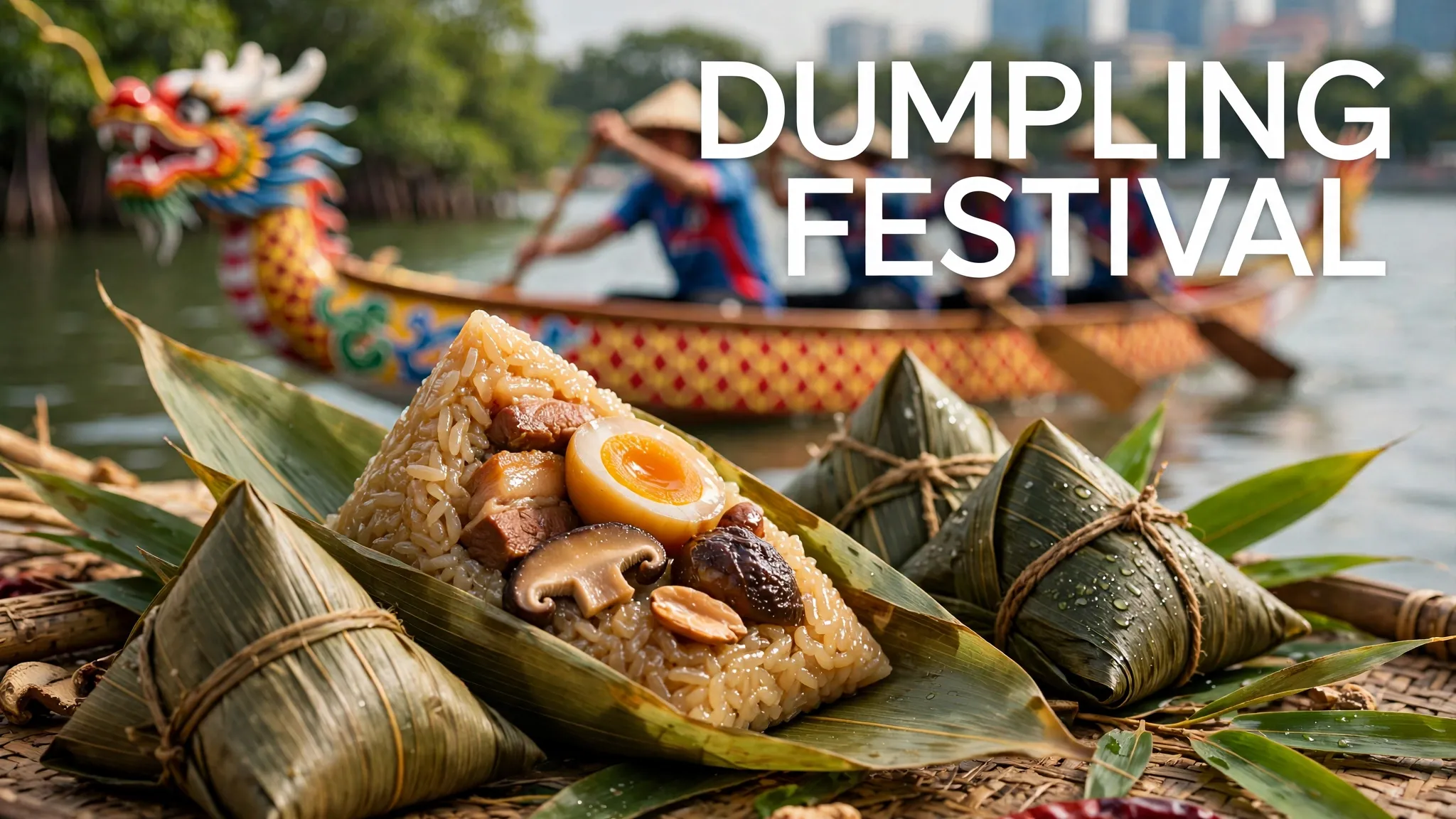
The Dumpling Festival is a traditional Chinese festival that celebrates cultural heritage through food, family customs and dragon boat racing. Its Chinese name is Duanwu Jie (端午节), and it is also widely known as the Dragon Boat Festival. The name Dumpling Festival comes from the custom of eating zongzi, rice parcels wrapped in bamboo leaves.
The occasion has deep roots in Chinese traditions, particularly the story of Qu Yuan. In Singapore, Chinese communities observe the day by sharing bak chang, preparing traditional foods and taking part in cultural activities. For many families, it is also a chance to pass familiar customs on to younger generations.
When Is the Dumpling Festival Celebrated?
The Dumpling Festival falls on the fifth day of the fifth month in the Chinese lunar calendar. Unlike the Gregorian calendar used in Singapore for everyday dates, the lunar calendar follows the cycles of the moon. That’s why the festival falls on a different date each year, usually in May or June.
Here are the festival dates for 2026 and 2027:
| Year | Dumpling Festival date | Day |
|---|---|---|
| 2026 | 19 June | Friday |
| 2027 | 9 June | Wednesday |
The date is shared across communities that follow the traditional Chinese calendar. In Singapore, families and food businesses often prepare for the occasion in the weeks leading up to the festival, particularly with seasonal bak chang offerings.
History and Origin of the Dumpling Festival
The history of the Dumpling Festival goes back to ancient China, with traditions connected to the Warring States period (475–221 BC). During this time, several states competed for power, including the state of Chu, where Qu Yuan served as a poet and government official.
The festival is closely associated with the story of Qu Yuan and his loyalty to Chu. According to traditional accounts, he was deeply troubled by political corruption and the decline of his state. After the Chu capital fell to enemy forces, the story says that he entered the Miluo River.
Local people are said to have raced their boats to search for him. They also threw rice into the water to prevent fish from disturbing his body. These acts became linked to two familiar festival customs: dragon boat racing and eating rice dumplings.
The exact origins of the festival involve older seasonal customs too, but Qu Yuan remains its best-known historical figure.
Who Was Qu Yuan and Why Is He Remembered?
Qu Yuan was a Chinese poet and statesman from the ancient state of Chu. He is remembered for his loyalty to his country, his political beliefs and his literary works. His poems expressed concern for his homeland and its people.
According to the traditional legend, Qu Yuan drowned himself in the Miluo River after his state suffered defeat. Local villagers reportedly went out in boats to find him, beating drums and throwing rice into the river.
Although details of the story are part of Chinese folklore, Qu Yuan’s name became closely connected with the Dumpling Festival. His memory represents loyalty, patriotism and devotion to one’s homeland. His story is still shared during Duanwu Jie celebrations in Chinese communities, including Singapore.
Why Do People Eat Dumplings During the Festival?
Eating rice dumplings is one of the best-known Dumpling Festival traditions. According to the Qu Yuan legend, villagers threw parcels of rice into the river to keep fish away from his body. Over time, this story became associated with the preparation and sharing of zongzi.
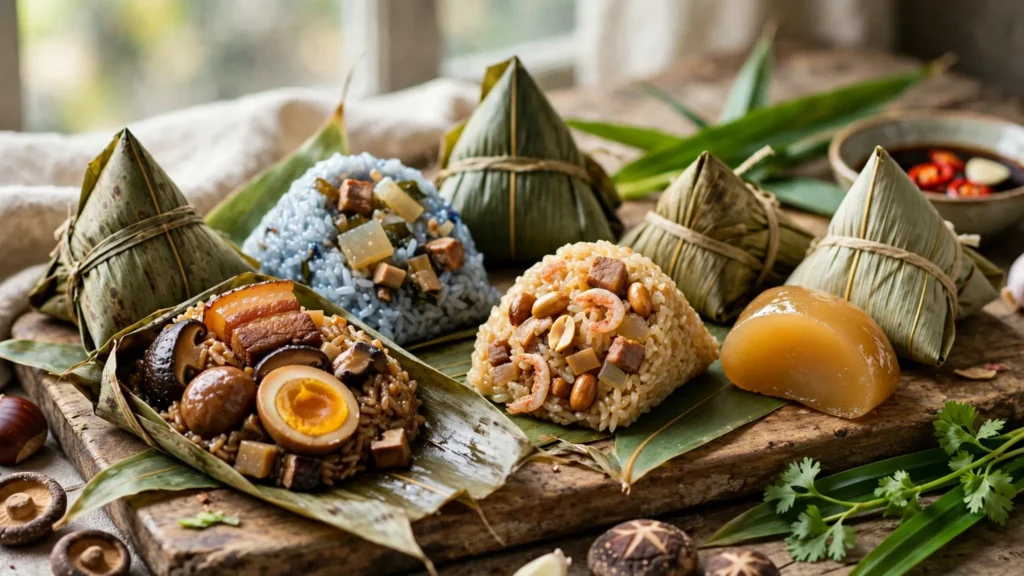
Traditional zongzi are made with glutinous rice wrapped in bamboo leaves and filled with ingredients such as pork, mushrooms, beans or sweet fillings. The parcels are folded, tied and cooked until the rice becomes soft and fragrant.
In Singapore, these rice dumplings are commonly called bak chang. Families often buy them from traditional shops or prepare them at home before the festival. Sharing bak chang is a familiar way of remembering the occasion.
Traditional Dumpling Festival Foods in Singapore
Singapore’s Chinese food culture includes rice dumplings influenced by different dialect groups and family traditions. Although zongzi is the widely recognised Chinese name, local varieties have their own ingredients, flavours and preparation methods.
Some popular types include:
| Dumpling type | Main ingredients | Taste |
|---|---|---|
| Hokkien Bak Chang | Pork, mushrooms, chestnuts | Savoury |
| Nyonya Chang | Pork, spices, candied winter melon | Sweet and savoury |
| Teochew Bak Chang | Glutinous rice, meat, beans | Sweet and savoury |
| Cantonese Zongzi | Glutinous rice, meat, beans | Rich and savoury |
| Kee Chang | Alkaline glutinous rice | Mild |
Hokkien Bak Chang: A familiar savoury option, usually filled with seasoned pork, mushrooms and chestnuts. Five-spice seasoning gives it a fragrant flavour.
Nyonya Chang: This Peranakan-style dumpling is known for its fragrant spices and sweet-savoury filling. Pandan leaves and candied winter melon may also feature in its preparation.
Teochew and Cantonese Dumplings: These have their own regional styles, with differences in rice, fillings and seasoning. Some Teochew versions combine sweet and savoury flavours.
Kee Chang: Made with alkaline glutinous rice, Kee Chang has a simpler taste and a slightly chewy texture. It is often enjoyed with sugar or kaya.
These foods reflect Singapore’s Chinese and Peranakan heritage. And while they are closely associated with the festival, many people enjoy rice dumplings throughout the year.
Dragon Boat Racing and Other Festival Traditions
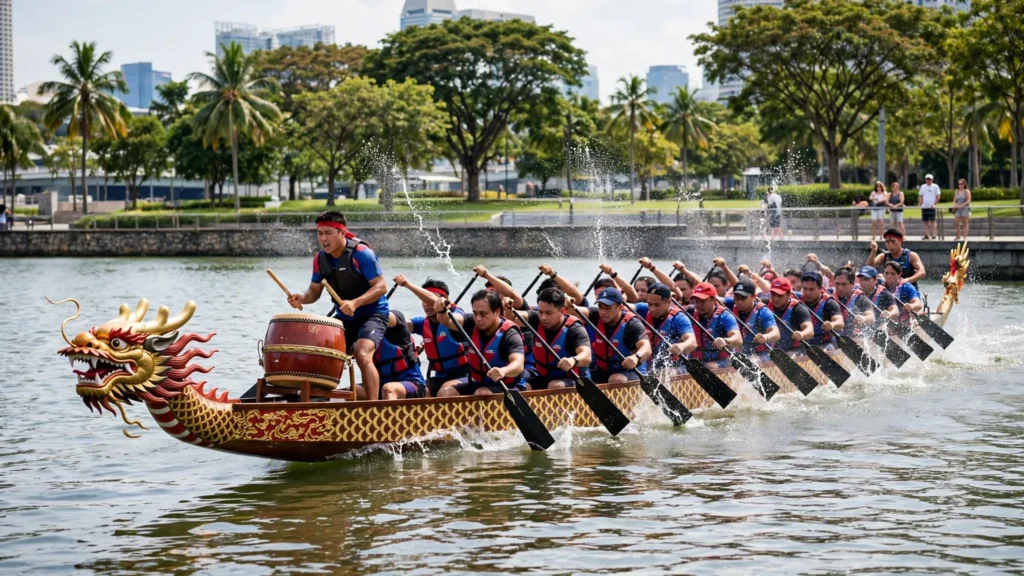
Dragon boat racing is another well-known part of the Dumpling Festival. The boats are long and narrow, usually decorated with dragon heads and tails. Teams of paddlers sit in rows and move together to the beat of a drummer, who helps maintain their rhythm.
The racing tradition is connected to the story of villagers searching for Qu Yuan in the Miluo River. Today, dragon boat events bring together sports teams, community groups and spectators.
But the celebration isn’t limited to boat races. Families may gather to prepare or share dumplings, visit relatives and introduce children to traditional customs. These activities keep the festival connected to everyday family life as well as its ancient stories.
How Singapore Celebrates the Dumpling Festival
In Singapore, the Dumpling Festival is closely associated with bak chang and the food traditions of Chinese Singaporean communities. Families often purchase dumplings from neighbourhood shops, traditional food businesses and seasonal festival stalls. Some households still prepare them together, wrapping glutinous rice and fillings in bamboo leaves.
Different dialect groups bring their own food traditions to the occasion. Hokkien, Teochew, Cantonese and Peranakan influences can all be seen in Singapore’s rice dumpling culture.
Dragon boat activities and community celebrations also help keep the occasion visible beyond family gatherings. Younger Singaporeans can learn about the festival through cultural programmes, food experiences and traditional activities.
And that’s part of what makes the celebration familiar to many local families — it connects Chinese heritage with Singapore’s multicultural food culture.
Frequently Asked Questions About the Dumpling Festival
1. What Is the Dumpling Festival in Singapore?
The Dumpling Festival is a traditional Chinese celebration observed in Singapore on the fifth day of the fifth lunar month. Families mark it by enjoying bak chang and remembering cultural traditions.
2. When Is the Dumpling Festival Celebrated?
It takes place on the fifth day of the fifth month in the Chinese lunar calendar. The Gregorian date changes each year, usually falling in May or June.
3. Why Is the Dumpling Festival Also Called the Dragon Boat Festival?
The festival is associated with the legend of Qu Yuan. According to tradition, villagers raced their boats along the river while searching for him.
4. Who Was Qu Yuan?
Qu Yuan was an ancient Chinese poet and statesman from the state of Chu. He is remembered for his loyalty to his homeland and his connection with the festival’s traditional origin story.
5. Why Do People Eat Bak Chang During the Dumpling Festival?
According to the traditional legend, villagers threw rice into the river after Qu Yuan’s death to keep fish away from his body. This custom became associated with zongzi.
6. What Are the Different Types of Chinese Rice Dumplings?
Popular types include Hokkien Bak Chang, Nyonya Chang, Teochew dumplings, Cantonese zongzi and Kee Chang. They differ in their rice, fillings, seasonings and flavours.
7. How Does Singapore Celebrate Duanwu Festival?
Chinese Singaporean families celebrate by sharing bak chang, preparing traditional foods and observing family customs. Dragon boat activities and community programmes also mark the occasion.
Final Thoughts
The Dumpling Festival carries centuries of Chinese history, food traditions and family customs. In Singapore, bak chang, dragon boat racing and community celebrations keep the occasion alive. Each year, the festival offers another chance to enjoy familiar foods and remember the stories behind them.