Power Bank on Flight: Rules, Limits and What Singapore Travellers Need to Know
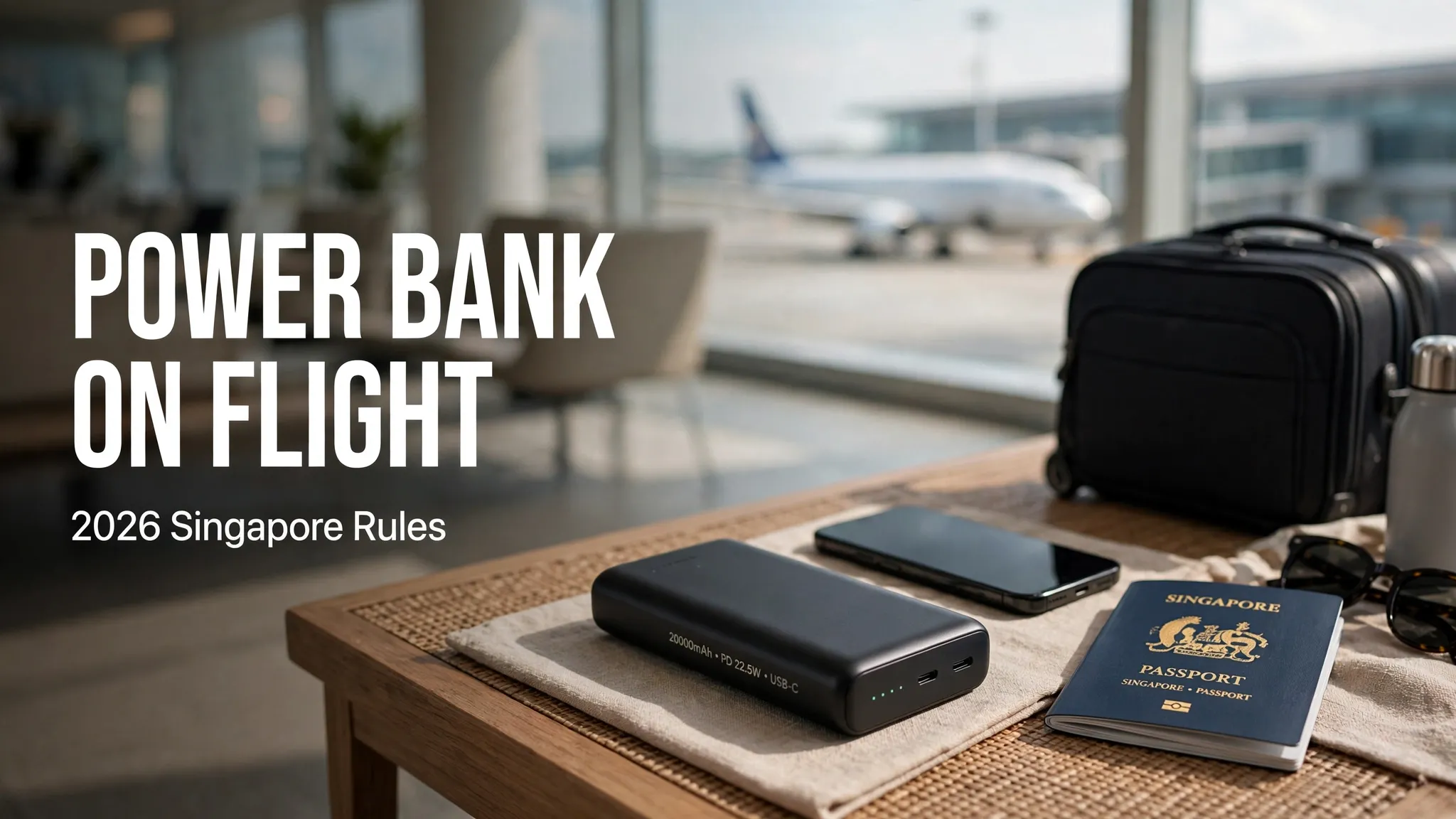
Power bank on flight rules are worth checking before packing your bags, especially if you’re travelling from Singapore. Whether you’re heading overseas for a holiday, visiting family or flying for work, knowing what you can bring onboard can save you time at the airport. Passengers departing from Changi Airport must follow specific power bank restrictions introduced in April 2026. While portable chargers are generally allowed in cabin baggage, their capacity, quantity and onboard use are subject to aviation safety rules and airline policies.
TL;DR: Power Bank on Flight Rules in Singapore
- Passengers departing Singapore can carry a maximum of two power banks.
- Power banks must be packed in hand luggage, not checked baggage.
- Up to 100Wh is allowed without airline approval.
- Above 100Wh and up to 160Wh requires airline approval.
- Power banks above 160Wh are prohibited.
- Charging power banks onboard is not allowed.
- Passengers are advised not to use them to charge other devices during the flight.
Can You Bring a Power Bank on Flight?
Yes, you can generally bring a power bank on flight, but it must meet the airline’s battery capacity and safety requirements. For passengers departing Singapore, power banks are allowed in cabin baggage only and cannot be placed in checked luggage.
The reason is simple: most portable chargers contain lithium-ion batteries. Although these batteries are commonly used in phones and other electronics, they can overheat or catch fire if damaged, poorly manufactured or short-circuited.
Keeping power banks in the cabin allows the crew to respond more quickly if a battery develops a problem. Before travelling, check your airline’s cabin baggage allowance and make sure your portable charger meets its requirements. Rules can also differ depending on your departure country and airline.
Power Bank Capacity Limits for Flights from Singapore
Power bank capacity is measured in milliamp-hours (mAh) and watt-hours (Wh). While mAh tells you how much electrical charge a battery can store, Wh measures its energy capacity and is used for airline safety restrictions.
Under Singapore’s aviation rules, effective from 15 April 2026, passengers may carry a maximum of two power banks. The capacity limits are:
| Battery capacity | General flight restriction |
|---|---|
| Up to 100Wh | Allowed without prior approval |
| Above 100Wh to 160Wh | Allowed with airline approval |
| Above 160Wh | Not permitted |
These restrictions apply to passengers departing Singapore, including those travelling from Changi Airport. If your power bank falls within the 100Wh to 160Wh range, contact your airline before arriving at the airport.
Remember that airlines may impose stricter restrictions. Having a power bank within the general capacity limit does not automatically mean every airline will accept it.
Can You Bring a 10,000mAh, 20,000mAh or 30,000mAh Power Bank?
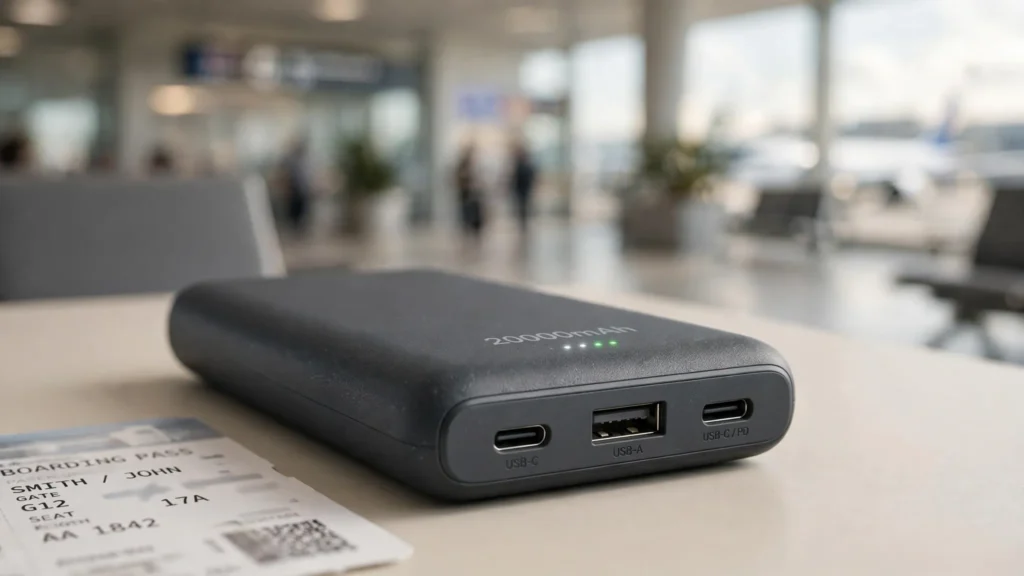
Most travellers use power banks with capacities of 10,000mAh or 20,000mAh, as these are convenient for charging smartphones and other portable devices.
A 30,000mAh power bank needs closer attention because its energy rating may exceed the standard 100Wh limit. The actual watt-hour rating depends on the battery’s voltage, so mAh alone does not determine whether it is allowed.
Here are some common examples, calculated using a nominal battery voltage of 3.7V:
| Power bank | Approx. Wh |
|---|---|
| 5,000mAh | 18.5Wh |
| 10,000mAh | 37Wh |
| 20,000mAh | 74Wh |
| 27,000mAh | 99.9Wh |
| 30,000mAh | 111Wh |
You can calculate the watt-hour rating using this formula:
Wh = (mAh × Voltage) ÷ 1,000
For example, a 20,000mAh power bank rated at 3.7V has an energy capacity of 74Wh. Always check the rating printed on your device rather than relying only on its advertised mAh capacity.
Can You Use a Power Bank During a Flight?
Carrying a power bank onboard and using it during the journey are two different things. Under Singapore’s updated restrictions, passengers must not charge power banks using the aircraft’s USB ports or seat power outlets.
Passengers are also advised not to use power banks to charge their phones, tablets or other electronic devices during the flight.
Singapore Airlines and Scoot prohibit both charging and using power banks throughout the flight. If you need to charge your phone, check whether your aircraft offers an approved in-seat charging facility.
It’s best to charge your devices before boarding, particularly if you’re taking a long-haul international flight.
Power Bank Rules for Singapore Airlines and Other Airlines
Power bank restrictions can vary between airlines, even when they operate under similar international aviation safety standards. Here are some important differences travellers should know:
| Airline | Important power bank rules |
|---|---|
| Singapore Airlines | Maximum two; up to 100Wh without approval; 100–160Wh requires approval; no onboard use or charging |
| Scoot | Maximum two; capacity approval required above 100Wh; no onboard use or charging |
| Emirates | Maximum one power bank, up to 100Wh; onboard use and charging prohibited |
| Qatar Airways | Maximum two, each up to 100Wh; power banks above 100Wh are not accepted |
| Malaysia Airlines | Maximum two; 100–160Wh requires approval; onboard use and charging prohibited |
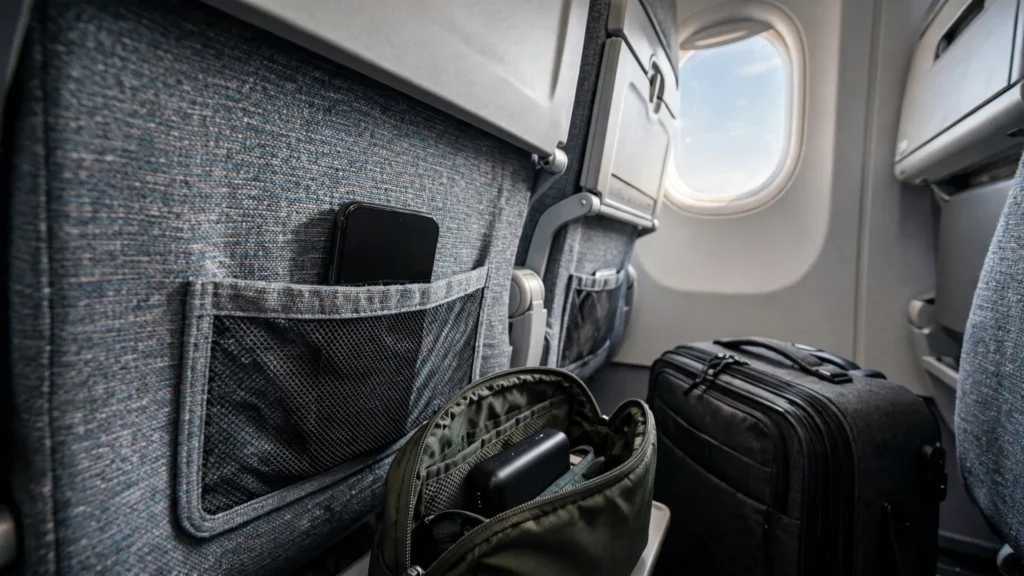
For Singapore Airlines passengers, power banks should remain easily accessible, such as in the seat pocket or under the seat in front. They must not be stored in overhead compartments.
Scoot also requires power banks to be carried in cabin baggage rather than checked luggage. Emirates has a stricter quantity limit, allowing only one power bank per passenger.
If your journey involves connecting flights or different operating airlines, check the rules for every carrier on your itinerary. A power bank accepted on one flight may not meet the restrictions of another.
How to Pack a Power Bank for a Flight
Packing your portable charger correctly can help prevent delays during airport security screening. Follow these simple precautions before leaving for Changi Airport:
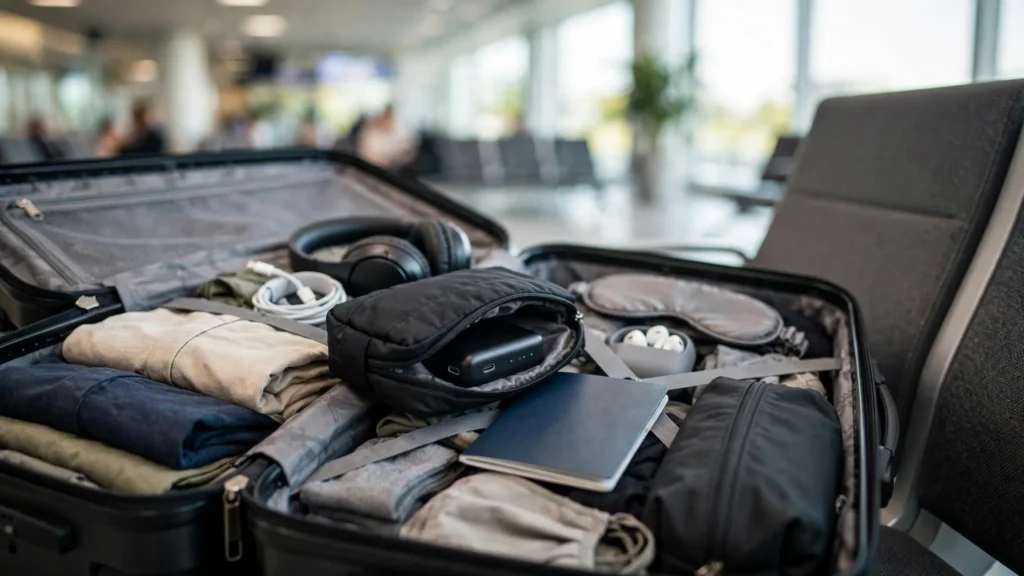
- Use hand luggage: Keep your power bank in cabin baggage. Never pack it in checked luggage.
- Protect the terminals: Cover exposed battery terminals or use the original packaging.
- Use a protective pouch: Keep each power bank in a separate pouch or plastic bag to prevent short circuits.
- Check its condition: Do not travel with damaged, swollen or overheating batteries.
- Keep it accessible: Follow your airline’s storage instructions and avoid placing it in overhead compartments when prohibited.
Also, make sure the battery capacity label is visible. If airport staff cannot identify its rating, you may face additional screening or have difficulty getting it accepted.
Frequently Asked Questions
1. Can I bring a 20,000mAh power bank on flight from Singapore?
Yes. A typical 20,000mAh power bank rated at 3.7V has a capacity of approximately 74Wh, which falls below the 100Wh limit.
2. Can I carry two power banks on a plane?
Yes. Passengers departing Singapore can carry up to two power banks, provided they meet the applicable capacity and packing requirements.
3. Are power banks allowed in checked baggage?
No. Power banks must be carried in cabin baggage because they contain lithium-ion batteries.
4. Can I take a 30,000mAh power bank on an international flight?
It depends on its Wh rating. A typical 30,000mAh model at 3.7V is around 111Wh and requires airline approval on Singapore departures.
5. Can I charge my phone using a power bank during a flight?
No. Singapore’s updated rules advise passengers not to use power banks to charge electronic devices onboard.
6. Do I need airline approval for a 160Wh power bank?
Yes. A power bank rated at exactly 160Wh falls within the category requiring prior airline approval. Anything above 160Wh is prohibited.
7. Are power banks allowed through Changi Airport security?
Yes, provided they meet the capacity, quantity, cabin baggage and battery protection requirements for flights departing Singapore.
Final Thoughts
Taking a power bank on flight from Singapore is generally straightforward if you follow the capacity and baggage restrictions. Check its Wh rating, carry no more than two and keep it in your cabin baggage. Before heading to Changi Airport, always confirm your airline’s latest requirements to avoid unexpected problems at departure.