Chicken Rice Calories: How Many Calories Are in a Plate of Singapore Chicken Rice?
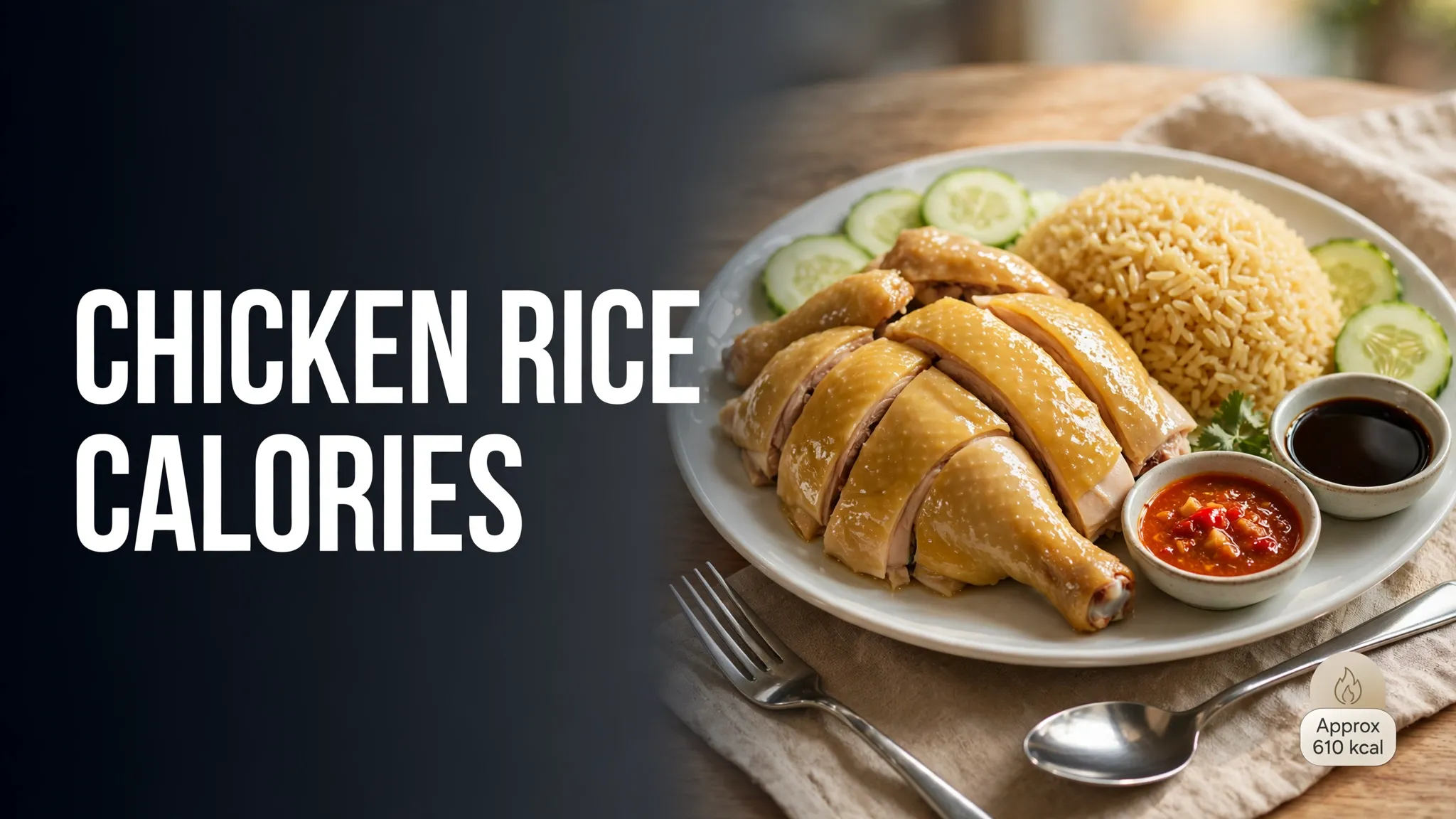
Chicken rice calories can vary quite a bit depending on how the chicken is prepared, how much rice is served and whether you eat the skin or add extra sauces. Hainanese chicken rice is a familiar favourite at Singapore hawker centres and food courts, often enjoyed as a quick lunch or a satisfying dinner. But is steamed chicken rice lighter than roasted chicken rice? And how much protein does a typical plate provide? Let’s look at the numbers, ingredients and simple ways to enjoy this local favourite while keeping an eye on your calorie intake.
TL;DR: Chicken Rice Calories at a Glance
A plate of steamed chicken rice contains approximately 488 calories (346g), while roasted chicken rice contains around 643 calories (363g), based on reported Singapore HPB food composition figures. Rice quantity, chicken skin, cooking oil and sauces affect the final count. Asking for siu fan (less rice) is a practical way to reduce your meal’s calorie content.
| Chicken rice type | Calories | Serving weight |
|---|---|---|
| Steamed chicken rice | 488 kcal | 346g |
| Roasted chicken rice | 643 kcal | 363g |
How Many Calories Are in Chicken Rice in Singapore?
A typical plate of Singapore chicken rice contains approximately 488 to 643 calories, depending on the preparation and serving size. Steamed chicken rice is listed at 488 kcal for a 346g serving, while roasted chicken rice contains around 643 kcal for a 363g serving. These figures give a useful starting point, but your hawker meal may contain more or fewer calories.
Why the difference? Each chicken rice stall has its own recipe. Some use more oil when preparing the fragrant rice, while others serve larger portions of chicken or rice. The amount of chicken skin and sauce also changes the nutritional value.
| Serving information | What it tells you |
|---|---|
| Per plate | Calories in the complete meal |
| Per 100g | Useful for comparing foods by weight |
| Rice only | Shows the contribution from the rice |
| Chicken only | Helps compare different chicken portions |
For reference, a 220g serving of chicken rice alone has been reported at approximately 387 calories. That’s a sizeable contribution before adding the chicken and accompanying sauces.
Steamed vs Roasted Chicken Rice Calories
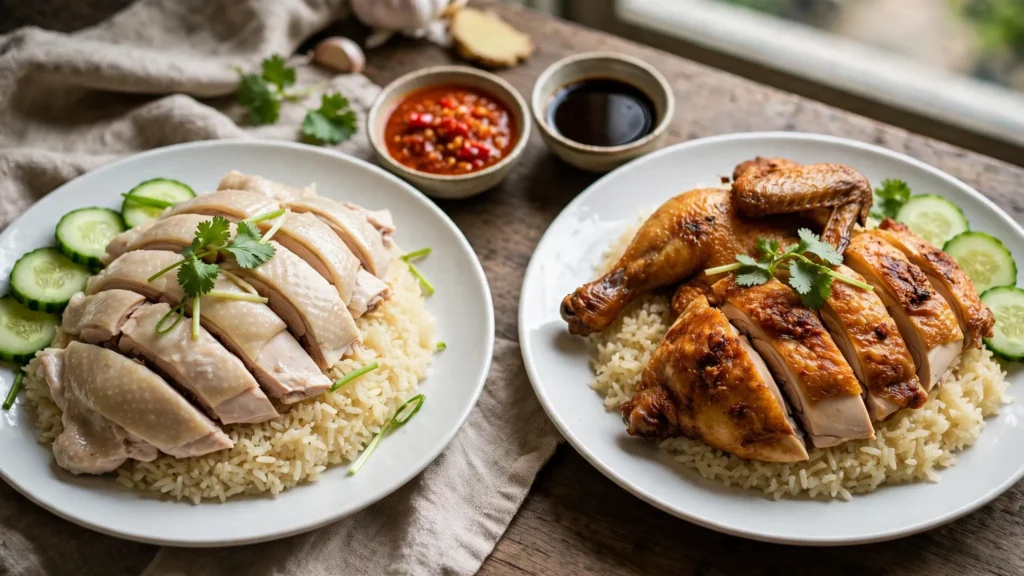
The two familiar versions of Hainanese chicken rice can have different calorie counts. Preparation, portion size and the amount of skin all matter.
Steamed Chicken Rice Calories
Steamed chicken is gently cooked, giving it a tender texture and mild flavour. A typical 346g serving is reported at 488 calories. The skin can still contribute fat, so removing it may change the meal’s nutritional value. The fragrant rice remains a major part of the calorie count.
Roasted Chicken Rice Calories
Roasted chicken has a more pronounced flavour and a slightly different texture, with browned skin and seasoning. A reported 363g serving contains around 643 calories. The cooking method, skin and amount of oil used can affect the final figure.
| Comparison | Steamed | Roasted |
|---|---|---|
| Preparation | Poached or steamed | Roasted |
| Texture | Tender and moist | Browned and flavourful |
| Skin | May be included | May be included |
| Reported calories | 488 kcal | 643 kcal |
| Serving weight | 346g | 363g |
Based on these serving estimates, steamed chicken rice has fewer calories. But the comparison is between complete plates of different weights, not identical portions. Your actual order may differ.
Chicken Rice Nutrition Facts
Chicken rice provides carbohydrates from the rice, protein from the chicken and fat from ingredients such as cooking oil and chicken skin. It also contains sodium from the broth, marinades and sauces.
Protein in Chicken Rice
Chicken is the main protein source. Both breast and thigh meat provide protein, although their fat content can differ. A complete plate also includes rice, which contributes a smaller amount of protein.
Carbohydrates and Fat
The fragrant rice supplies most of the meal’s carbohydrates. Cooking oil and chicken skin contribute to its fat content. Chilli sauce and dark soy sauce can add sodium, so the amount you use matters too.
| Nutrient | Main source in the meal |
|---|---|
| Calories | Rice, chicken, oil and sauces |
| Protein | Chicken meat and rice |
| Carbohydrates | Chicken-flavoured rice |
| Total fat | Chicken skin and cooking oil |
| Sodium | Seasonings, sauces and broth |
There is no single nutrition figure that applies to every hawker plate. A larger rice portion or extra chicken will change the totals. For a more accurate comparison, use the serving weight and nutritional information for the specific dish rather than combining figures from different recipes.
Which Chicken Rice Ingredients Add More Calories?
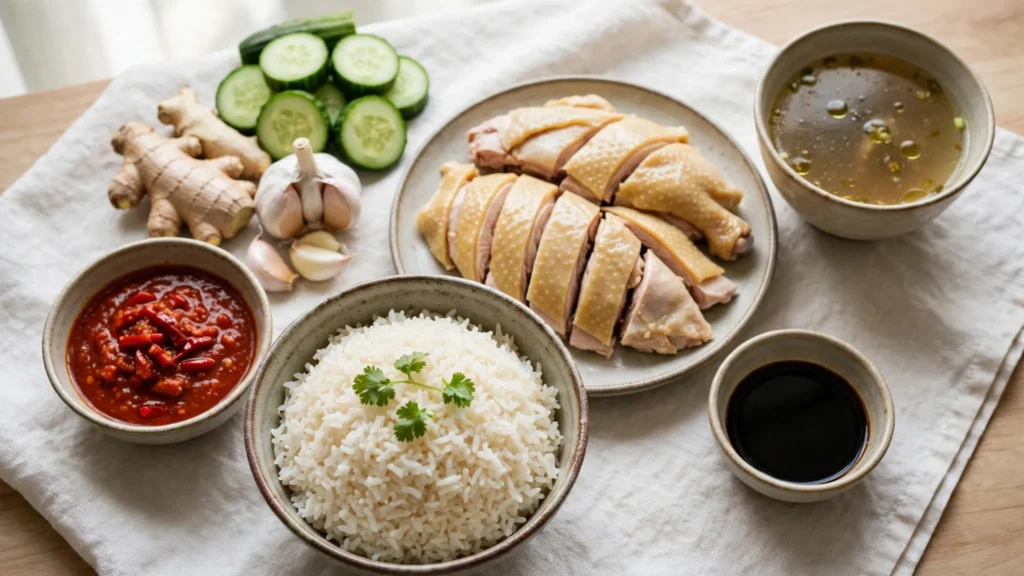
The fragrant rice is one of the biggest contributors to chicken rice calories. It is commonly cooked with chicken stock, garlic, ginger and oil, giving it a richer flavour than plain steamed rice.
Chicken meat provides protein, while the skin adds fat. Chilli sauce may contain oil, and the amount used can increase the meal’s calorie content. Dark soy sauce is usually added for flavour and colour; its sodium content is worth considering too.
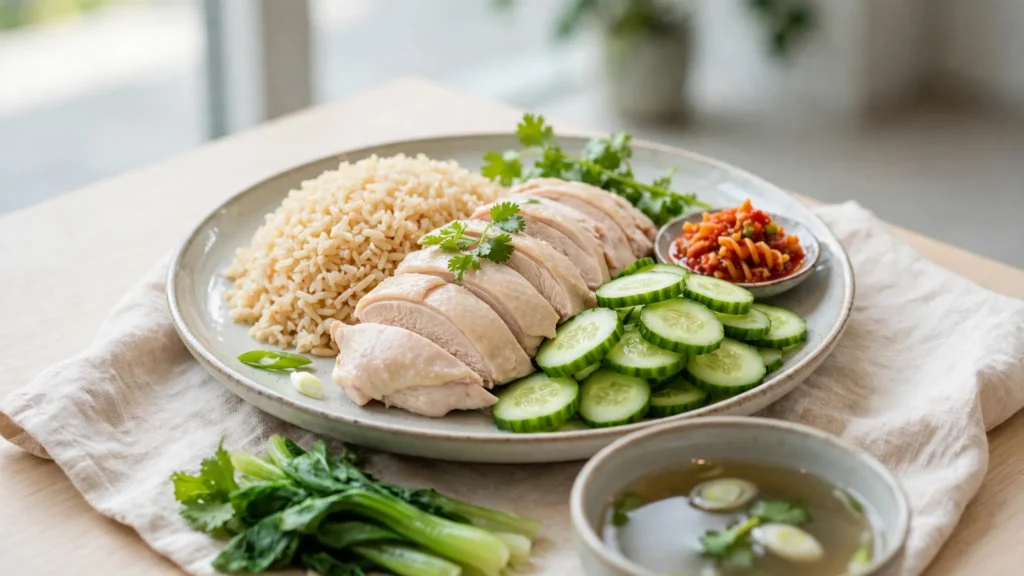
Cucumber adds freshness and a little extra volume without contributing many calories. Chicken broth is another familiar accompaniment, although its sodium content can vary between stalls.
A few spoonfuls of sauce may not seem like much, but regular additions can make a difference to your total intake.
Chicken Rice Prices in Singapore
Chicken rice remains a familiar everyday meal at neighbourhood hawker centres, coffee shops and shopping mall food courts. Prices depend on the stall, location, chicken cut and serving size. A standard hawker plate commonly falls around S$4 to S$7, while premium outlets and larger portions may cost more.
| Meal option | Indicative price |
|---|---|
| Basic chicken rice | S$4–S$6 |
| Steamed chicken rice | S$4.50–S$7 |
| Roasted chicken rice | S$4.50–S$7 |
| Extra chicken portion | Varies by stall |
These are indicative prices, not fixed Singapore-wide rates. Check the stall’s current menu before ordering, especially at popular central locations and shopping mall food courts.
Is Chicken Rice Good for Weight Loss?
Chicken rice can fit into a balanced eating plan, even if you are trying to lose weight. The chicken provides protein, which helps make a meal satisfying, while the rice supplies energy. The main thing to watch is your total portion and daily calorie intake.
A large serving of fragrant rice, chicken skin and generous sauces can push the calorie count higher than expected. You do not have to stop eating chicken rice, though. Smaller rice portions and sensible sauce choices can make the meal easier to fit into your daily calorie target.
Weight loss depends on maintaining a calorie deficit over time, not avoiding one particular hawker dish. A regular plate can still be enjoyed as part of a balanced diet.
How to Make Your Chicken Rice Meal Healthier
A few small changes at the hawker stall can make your usual order lighter:
- Ask for siu fan: This means less rice, which can reduce the meal’s carbohydrate and calorie content.
- Choose steamed chicken: It has fewer reported calories in the serving comparison above.
- Request skinless chicken: Removing the skin can reduce some of the meal’s fat.
- Use less sauce: Keep chilli and dark soy sauce portions moderate.
- Add cucumber: Enjoy the fresh cucumber slices served alongside the chicken.
- Be mindful of the rice: Chicken-flavoured rice is delicious, but a smaller serving may suit your calorie target better.
You can still enjoy the familiar taste of a Singapore hawker meal without making every part of your order a large portion.
Frequently Asked Questions About Chicken Rice Calories
How many calories are in one plate of Singapore chicken rice?
A reported serving of steamed chicken rice contains 488 kcal (346g), while roasted chicken rice contains 643 kcal (363g). Actual hawker portions can vary.
Is steamed chicken rice healthier than roasted chicken rice?
Steamed chicken rice has fewer calories in the reported serving comparison. However, portion size, chicken skin and cooking ingredients also affect its nutritional value.
How many calories are in chicken rice without skin?
There is no single fixed calorie count. Removing the skin reduces some fat, but the total still depends on the chicken portion and amount of rice served.
Is chicken rice good for weight loss?
Yes, it can fit into a weight-loss eating plan. Choose a smaller rice portion, watch your sauces and consider skinless chicken.
Does chicken rice contain a lot of protein?
Chicken rice provides protein from the chicken meat. The amount depends on the cut and serving size, with larger chicken portions generally providing more.
How many calories are in chicken rice with less rice?
A smaller rice portion will generally reduce the total calories because the fragrant rice contributes a substantial share of the meal’s energy. The exact reduction depends on how much rice the stall removes.
Conclusion
Chicken rice calories depend on the chicken preparation, rice portion, skin and sauces. Steamed chicken rice is the lighter option in the reported serving comparison, although actual hawker meals vary. Asking for siu fan, choosing skinless chicken and using less sauce can help you enjoy this Singapore favourite while managing your calorie intake.