Mee Rebus Recipe: How to Make Authentic Singapore Hawker-Style Mee Rebus
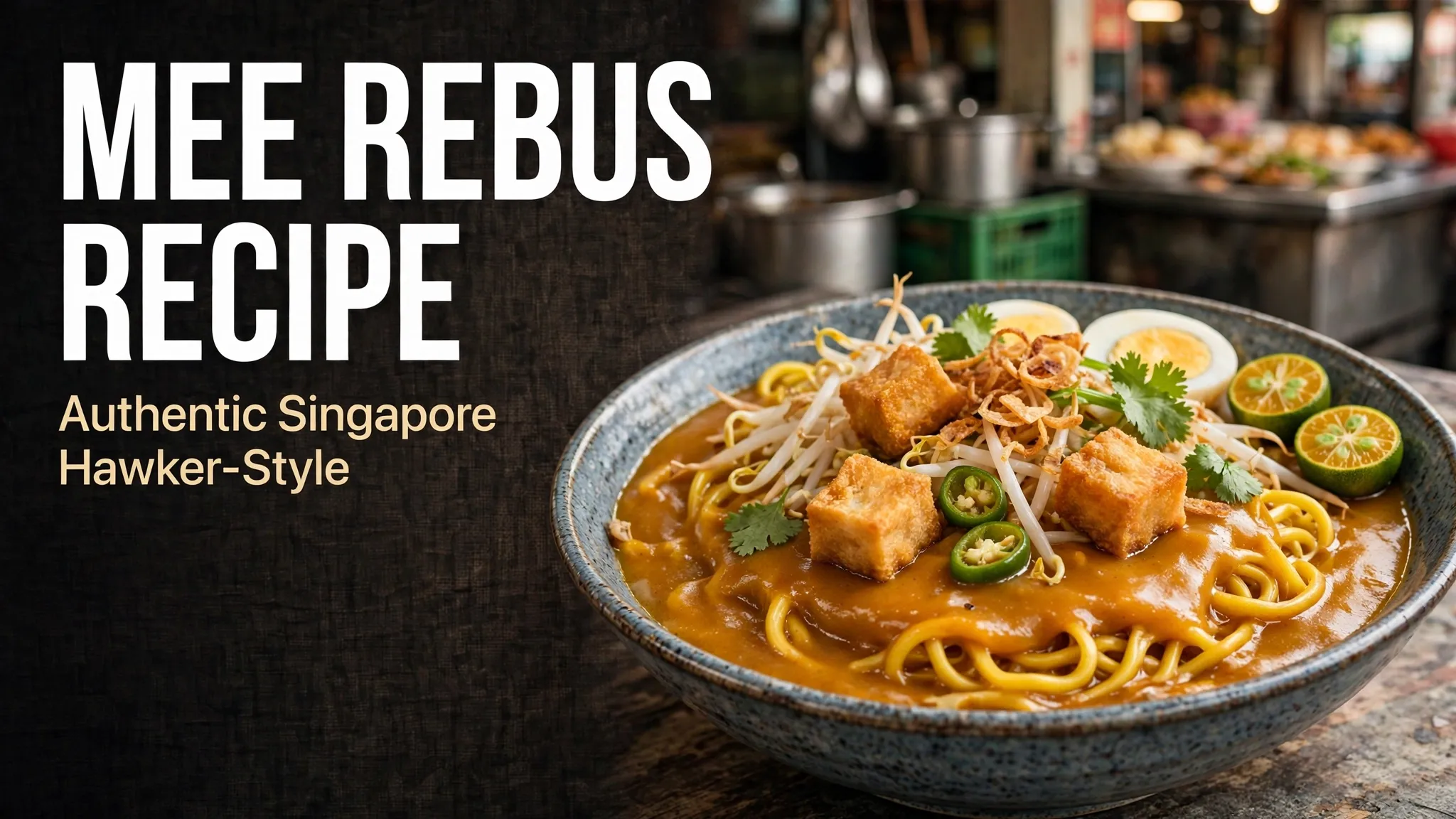
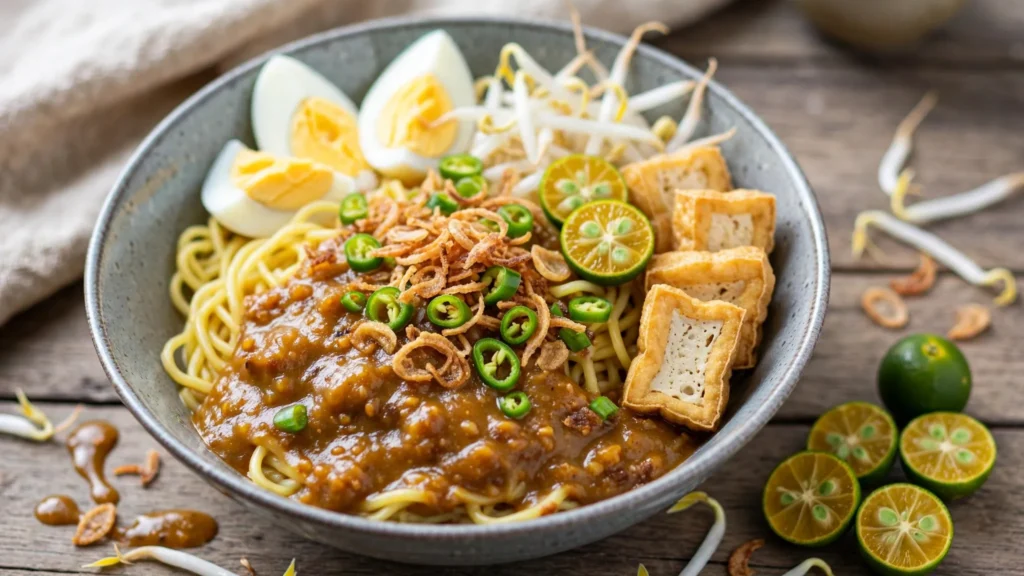
Mee Rebus is a popular Malay noodle dish enjoyed across Singapore and Malaysia. It features yellow egg noodles covered in a thick, sweet, savoury and mildly spicy sweet potato gravy. The flavour comes from a fragrant rempah made with shallots, garlic, dried shrimp, lemongrass and galangal. Finished with tau kwa, taugeh, boiled eggs and fresh chillies, this homemade Singapore Mee rebus recipe brings familiar hawker food flavours into your kitchen. Here’s how to prepare the gravy, measure the ingredients and assemble a satisfying bowl from scratch.
TL;DR: Mee Rebus Recipe at a Glance
Mee rebus recipe combines yellow egg noodles with a thick gravy made from mashed sweet potatoes, stock, curry powder and aromatic rempah. Fry the spice paste, simmer it with the sweet potato and stock, then serve the kuah over blanched noodles. Add tau kwa, taugeh, boiled egg, fried shallots, chillies and calamansi. Estimated total time: 60 minutes.
What Is Mee Rebus?
Mee Rebus is a traditional Malay noodle dish popular in Singapore and Malaysia. Its name refers to boiled noodles, which are served with a rich, warm kuah rather than a dry sauce. Singapore hawker centres commonly serve it with yellow egg noodles, sweet potato gravy, tofu, bean sprouts, egg and fresh chilli. Malaysian versions can vary by region and family recipe, with differences in sweetness, spice levels, gravy ingredients and toppings. The sweet potato gives the sauce its thick texture and gentle sweetness, while rempah, dried shrimp and fermented soybean paste bring savoury depth.
Mee Rebus Recipe – Preparation Time and Serving Size
The following timings are estimates for a home kitchen. Actual cooking time may vary depending on the size of the sweet potato pieces, your blender and how quickly the gravy reaches the desired thickness.
| Recipe detail | Information |
|---|---|
| Preparation time | 20 minutes |
| Cooking time | 40 minutes |
| Total time | 60 minutes |
| Servings | 4 people |
| Difficulty | Medium |
| Cuisine | Singaporean / Malaysian |
| Main ingredient | Yellow egg noodles |
| Cooking method | Boiling, frying and simmering |
Ingredients for Authentic Mee Rebus
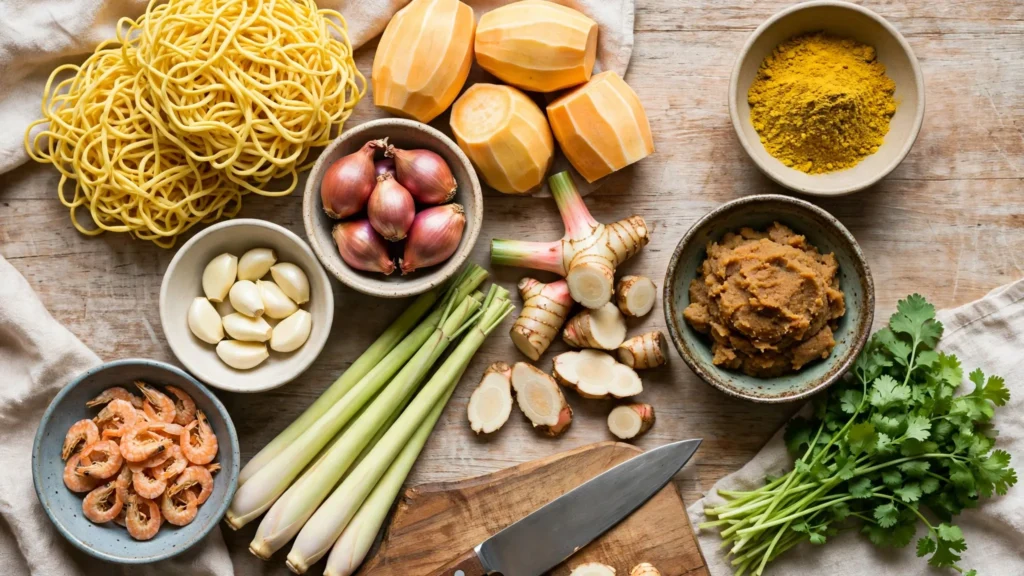
The gravy is the heart of this mee rebus recipe. Sweet potatoes provide body and sweetness, while dried shrimp, shallots, garlic and herbs build the savoury base. Curry powder and taucheo add warmth and depth. Choose fresh toppings for a bowl that tastes closer to traditional Malay hawker food.
Main Ingredients
| Ingredient | Quantity | Purpose |
|---|---|---|
| Yellow egg noodles (mee kuning) | 500 g | Noodle base |
| Sweet potatoes (keledek) | 400 g | Thickens the gravy |
| Shallots | 6 medium | Adds sweetness and aroma |
| Garlic | 4 cloves | Builds the spice base |
| Lemongrass (serai) | 2 stalks | Fresh herbal aroma |
| Galangal (lengkuas) | 2 cm piece | Warm, earthy flavour |
| Dried shrimp | 3 tbsp | Savoury depth |
| Curry powder | 2 tbsp | Colour and gentle spice |
| Taucheo | 1 tbsp | Fermented soybean flavour |
| Chicken or beef stock | 1 litre | Gravy liquid |
| Cooking oil | 3 tbsp | For frying rempah |
| Salt and sugar | To taste | Seasoning |
Traditional Mee Rebus Toppings
| Topping | Quantity |
|---|---|
| Tau kwa (firm beancurd) | 200 g |
| Taugeh (bean sprouts) | 150 g |
| Hard-boiled eggs | 2, halved |
| Crispy fried shallots | 2 tbsp |
| Sliced green chillies | 1–2 |
| Calamansi lime | 4 |
| Fresh coriander | A small handful |
Cut the tau kwa into cubes and fry until lightly golden. The dried shrimp should be soaked briefly before blending, and the lemongrass should be trimmed and sliced. These small preparation steps make blending easier and help the rempah cook evenly.
How to Make Mee rebus recipe at Home
Follow these steps to prepare the sweet potato gravy, cook the noodles and put together four bowls of Singapore hawker-style Mee Rebus.
Step 1 – Prepare and Boil the Sweet Potatoes
Peel the sweet potatoes and cut them into small, evenly sized pieces. Place them in a saucepan, cover with water and boil until fork-tender, usually around 12–15 minutes. Drain well, then mash or blend until smooth. Add a spoonful of water if the mixture is too firm to blend. Set aside. The mashed keledek gives the mee rebus gravy its thick consistency, so try to remove large lumps before adding it to the pot.
Step 2 – Prepare the Rempah Spice Paste
Soak the dried shrimp in warm water for around 10 minutes, then drain. Peel the shallots and garlic. Remove the tough outer layers from the lemongrass and slice the tender parts. Add the shallots, garlic, dried shrimp, lemongrass and galangal to a blender. Blend into a fairly smooth paste, adding a little water only when needed. This rempah forms the aromatic base of the gravy, so blend it well rather than leaving large pieces of shallot or lemongrass.
Step 3 – Fry the Rempah Until Fragrant
Heat the cooking oil in a large pot over medium heat. Add the blended spice paste and stir regularly so it doesn’t stick to the bottom. Fry for around 8–10 minutes, or until fragrant and the raw smell has faded. Lower the heat if the paste starts browning too quickly. Add the curry powder and taucheo, then stir for another minute or two. The mixture should smell aromatic and look evenly cooked before you add the liquid.
Step 4 – Make the Mee Rebus Gravy
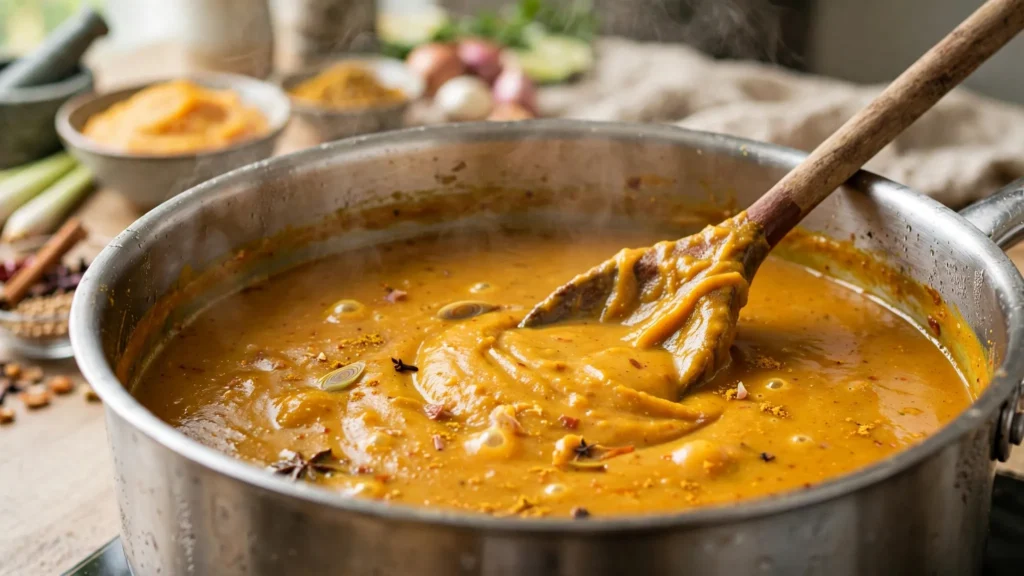
Add the mashed sweet potatoes to the pot and mix them into the fried rempah. Pour in the chicken or beef stock gradually, stirring as you go to prevent lumps. Bring the mixture to a gentle simmer, then cook for around 15–20 minutes. Stir occasionally, especially near the bottom of the pot. Season with salt and a little sugar to balance the savoury and sweet flavours. If the kuah becomes too thick, add more stock or water. For a thicker sauce, let it simmer a little longer.
Step 5 – Prepare Yellow Noodles and Toppings
Bring a separate pot of water to a boil. Blanch the yellow egg noodles according to the packet instructions, then drain thoroughly. Briefly blanch the taugeh so they remain slightly crisp. Fry the tau kwa cubes until golden on the outside, boil the eggs and cut them into halves. Slice the green chillies, wash the coriander and prepare the calamansi. Keep the toppings ready before serving, as the noodles taste best when assembled fresh.
Step 6 – Assemble and Serve
Divide the warm yellow noodles between four serving bowls. Ladle the hot sweet potato kuah generously over each portion, making sure the noodles are well covered. Add fried tau kwa, taugeh and half a boiled egg to each bowl. Finish with crispy fried shallots, sliced green chillies and fresh coriander. Serve with calamansi on the side so everyone can squeeze in lime juice according to taste. Enjoy while the gravy is warm and the noodles still have a springy texture.
Tips for Making the Best Singapore-Style Mee Rebus
- Cook sweet potatoes until soft: Undercooked pieces can leave the kuah grainy. Mash or blend them until smooth.
- Give the rempah enough time: Fry it properly so the raw smell disappears and the aromatics develop.
- Adjust the gravy slowly: Add stock a little at a time if the sauce becomes too thick.
- Balance the flavour: Taste before serving and adjust salt, sugar and chilli according to preference.
- Prepare fresh toppings: Taugeh, coriander and calamansi bring freshness to the rich sauce.
- Serve straight away: Keep the noodles separate until serving to prevent them from soaking up too much kuah.
Mee rebus recipe Ingredient Substitutions
Some ingredients can be changed according to availability or dietary preference. These alternatives may slightly change the traditional flavour, but the dish can still make a satisfying meal.
| Original ingredient | Possible alternative |
|---|---|
| Beef stock | Chicken or vegetable stock |
| Dried shrimp | Omit for a vegetarian version |
| Fresh galangal | Galangal paste |
| Yellow egg noodles | Thick egg noodles |
| Calamansi | Fresh lime |
| Taucheo | Another fermented soybean paste |
For vegetarian Mee Rebus, use vegetable stock and leave out the dried shrimp. Check that the curry powder and fermented soybean paste suit your dietary requirements. The gravy may taste less savoury without dried shrimp, so adjust the seasoning after simmering.
Mee rebus recipe Nutrition Information
Nutrition depends on the noodle brand, stock, oil, toppings and final portion size. Exact values should be calculated from the measured ingredients used in a tested batch, divided into four equal servings. The figures below are intentionally left for calculation rather than presented as unverified estimates.
| Nutrient | Per serving |
|---|---|
| Calories | Calculate after testing |
| Protein | Calculate after testing |
| Carbohydrates | Calculate after testing |
| Fat | Calculate after testing |
| Fibre | Calculate after testing |
How to Store and Reheat Mee rebus recipe
Store leftover gravy separately from the noodles and toppings. Allow it to cool, then transfer it to an airtight container and refrigerate promptly. For longer storage, freeze the gravy in individual portions. Thaw frozen gravy in the refrigerator before reheating it in a saucepan until steaming hot, stirring regularly. Prepare fresh noodles and toppings when serving again. Avoid storing assembled bowls, as the noodles can become soft and absorb too much sauce.
Frequently Asked Questions About Mee rebus recipe
What makes Mee Rebus gravy thick?
Mashed sweet potatoes give Mee Rebus its familiar thick texture. They blend with the stock and rempah to create a smooth, sweet-savoury kuah. Simmering also helps the sauce reach the right consistency.
Is Singapore Mee Rebus spicy?
It is usually mildly to moderately spicy, depending on the curry powder and chilli used. Add less chilli for a gentler bowl or serve sliced green chillies separately.
Can I make Mee Rebus without beef?
Yes. Chicken stock works well, while vegetable stock can be used for a vegetarian version. Leave out dried shrimp for a fully vegetarian preparation.
What noodles are used in Mee Rebus?
The usual choice is yellow egg noodles, also called mee kuning. They are blanched before serving with hot gravy.
What is taucheo in Mee Rebus?
Taucheo is fermented soybean paste. It adds a salty, savoury flavour to the spice mixture and gravy.
Can I freeze Mee Rebus gravy?
Yes. Freeze the gravy in airtight, portion-sized containers. Thaw and reheat it until steaming hot, then serve with freshly prepared noodles and toppings.
Final Thoughts
A good bowl of homemade Mee rebus recipe brings together smooth sweet potato gravy, fragrant rempah and familiar hawker-style toppings. Prepare the kuah ahead if needed, then blanch the noodles and add fresh garnishes just before serving. A squeeze of calamansi makes a lovely finishing touch.