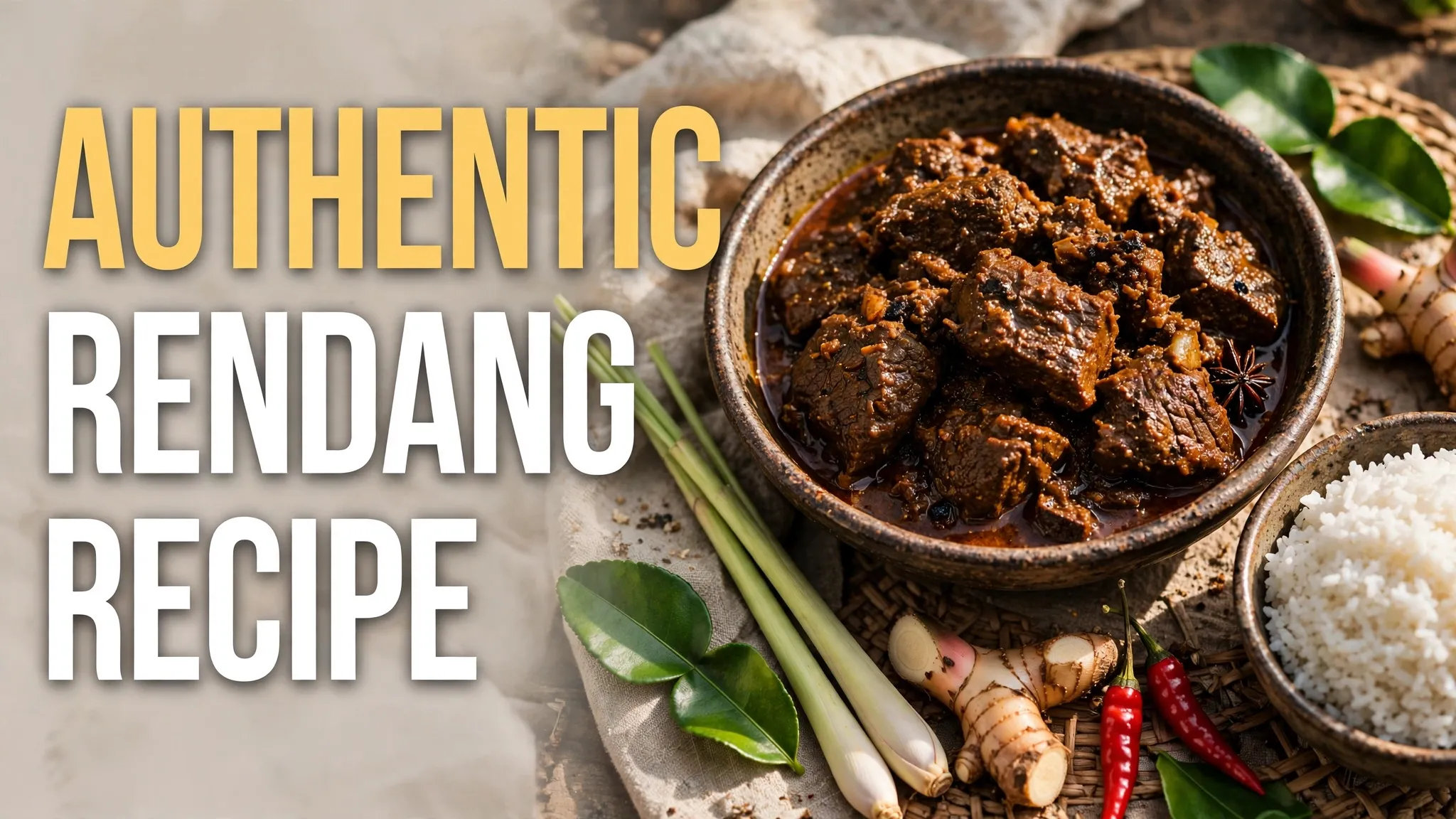
Authentic Rendang Recipe: Easy Indonesian Beef Rendang
A good Rendang recipe brings together tender beef, creamy coconut milk and a fragrant blend of spices, all slowly cooked until the sauce becomes thick, dark and full of flavour. Authentic Indonesian beef rendang comes from Minangkabau cooking traditions, while Malaysian and Singaporean versions are also loved across the region. Beef chuck, lemongrass, galangal, ginger, chillies and toasted coconut create its distinctive taste. With the right ingredients and a little patience, you can prepare traditional rendang at home and enjoy a familiar favourite from Singapore Malay cuisine.
TL;DR: Rendang Recipe at a Glance
Rendang is a slow-cooked Indonesian beef dish made with coconut milk, chillies, lemongrass, galangal and aromatic spices. For this beef rendang recipe, cook 1 kg of beef with rempah until tender, then add kerisik and reduce the sauce until dark and thick. Preparation takes around 25 minutes, followed by approximately 3 hours of cooking. The recipe serves 4–6 people.
What Is Rendang?
The Indonesian Origins of Traditional Rendang
Rendang originated in Minangkabau cuisine in West Sumatra, Indonesia. The term rendang daging refers to meat cooked slowly with spices and coconut milk until the liquid reduces and coats the beef. Traditional rendang is known for its deep brown colour, rich aroma and long cooking process. Malaysian rendang often has a softer, more gravy-like consistency, although recipes vary between households and regions. In Singapore, rendang is a familiar part of Malay food culture, often served at nasi padang stalls, family meals and Hari Raya gatherings.
Ingredients for Authentic Beef Rendang
Main Ingredients for Rendang
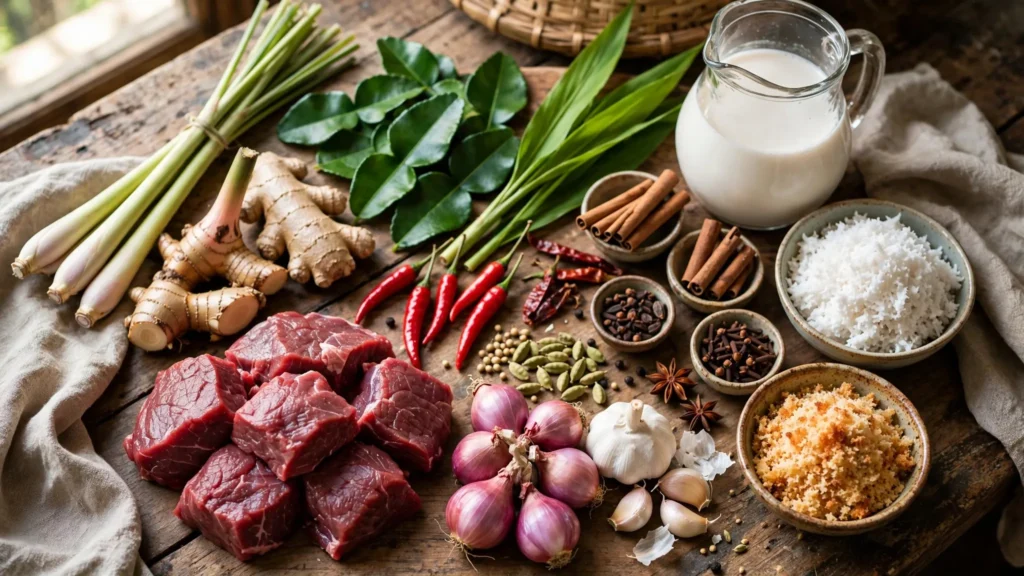
Beef chuck is a good choice because its connective tissue softens during slow cooking. Full-fat coconut milk gives the sauce its creamy base, while lemongrass, galangal, ginger, shallots and garlic build the aroma. Dried red chillies provide heat, and kaffir lime leaves and turmeric leaves add a fresh herbal note.
Ingredients for Rendang Spice Paste (Rempah)
Rempah is the blended spice paste that gives rendang its character. Chillies, shallots, garlic, ginger and galangal form its base. Ground coriander, cumin and fennel add warmth. Fresh galangal is best, but galangal paste can work if fresh lengkuas is unavailable. Soak dried chillies in hot water before blending so they soften properly.
What Is Kerisik?
Kerisik is grated coconut toasted until golden brown and then ground into a coarse paste. It adds a nutty taste and helps thicken the rendang. You can make it at home using unsweetened desiccated or freshly grated coconut.
Table 1: Rendang Recipe ingredients and quantities
| Ingredient | Quantity | Purpose |
|---|---|---|
| Beef chuck, cubed | 1 kg | Main protein |
| Full-fat coconut milk | 800 ml | Richness and sauce |
| Lemongrass | 2 stalks | Aroma |
| Shallots | 8 | Flavour base |
| Garlic | 5 cloves | Flavour base |
| Fresh galangal | 2-inch piece | Traditional aroma |
| Fresh ginger | 1-inch piece | Warmth |
| Dried red chillies | 6–8 | Spice |
| Kaffir lime leaves | 4 | Citrus fragrance |
| Turmeric leaf | 1, optional | Herbal aroma |
| Grated coconut | 50 g | Kerisik |
| Ground coriander | 1 tbsp | Warm spice |
| Ground cumin | 1 tsp | Earthy flavour |
| Ground fennel | ½ tsp | Sweet spice note |
| Tamarind paste | 1 tbsp | Gentle tang |
| Palm sugar | 1 tbsp | Balances the spices |
| Cooking oil | 2 tbsp | Frying rempah |
| Salt | To taste | Seasoning |
| Water | 150 ml | Helps the beef cook |
How to Make Rendang Recipe (Step-by-Step)
Step 1 – Prepare the Rendang Spice Paste
Soak the dried chillies in hot water for around 15 minutes, then drain them. Add the chillies, shallots, garlic, ginger and galangal to a blender. Pour in a little water and blend until you have a smooth, thick paste. It should be fine enough to coat the beef without large pieces of raw aromatics.
Step 2 – Prepare the Toasted Coconut (Kerisik)
Place the grated coconut in a dry frying pan over low to medium-low heat. Stir continuously until it turns golden brown and smells nutty. Watch it closely because coconut can burn quickly. Allow it to cool slightly, then grind or pound it into a coarse paste. Set aside.
Step 3 – Fry the Rempah Until Fragrant
Heat the cooking oil in a heavy-bottomed pot over medium heat. Add the blended spice paste and fry for around 10–15 minutes, stirring regularly. Add the bruised lemongrass, kaffir lime leaves and turmeric leaf, if using. The paste should become darker and fragrant, with some oil starting to appear around its edges. Proper frying helps remove the raw taste of the spices.
Step 4 – Add Beef and Coconut Milk
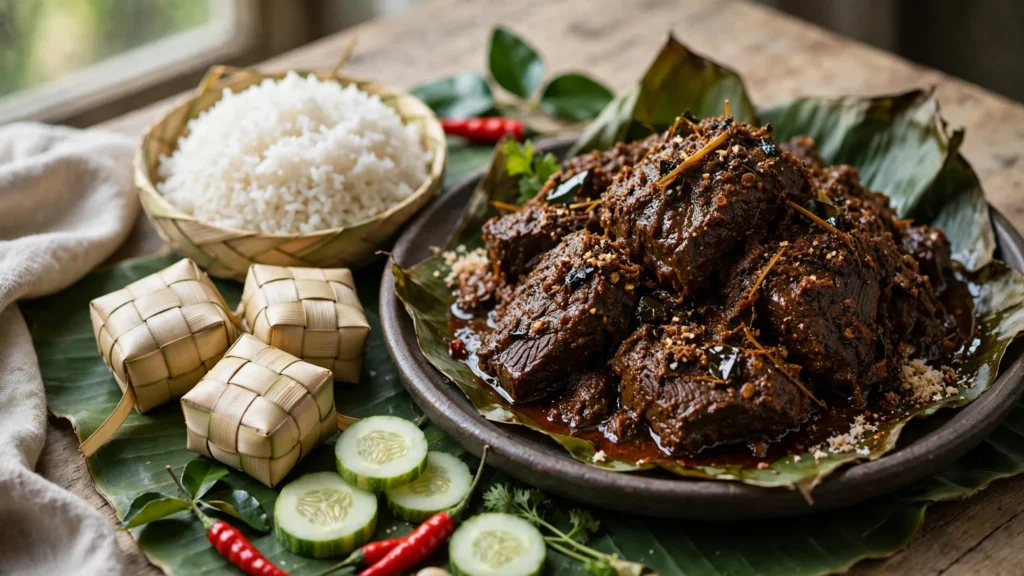
Add the beef cubes and stir until every piece is coated with the rempah. Pour in the coconut milk and water. Add the ground coriander, cumin, fennel, tamarind paste and palm sugar. Season lightly with salt. Stir well and bring the mixture to a gentle simmer. Avoid turning the heat too high.
Step 5 – Slow Cook Until the Beef Is Tender
Reduce the heat to low and leave the pot uncovered. Simmer gently for around 1½–2 hours, stirring every 10–15 minutes so the beef does not stick to the bottom. The coconut milk will gradually reduce, and the meat will absorb the spice mixture. If the liquid disappears before the beef becomes tender, add a small splash of hot water.
Step 6 – Add Kerisik and Reduce the Sauce
Stir in the prepared kerisik once the beef is tender and the sauce has thickened. Continue cooking for another 45–75 minutes over low heat. Stir more frequently as the mixture becomes dry. The sauce will turn deeper brown, the coconut oil may separate, and the spices will cling to the beef. Keep the heat gentle to prevent the bottom from burning.
Step 7 – Serve Your Homemade Beef Rendang
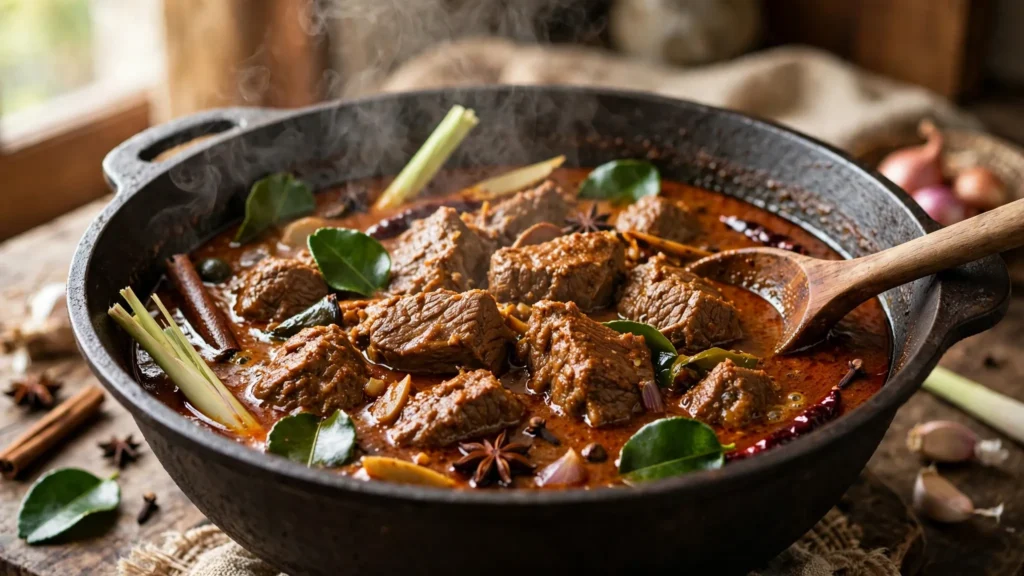
Check that the beef is tender enough to cut easily with a fork. Taste the sauce and adjust the salt if needed. Remove the lemongrass stalks and large leaves before serving. Your traditional beef rendang is ready to enjoy with steamed rice, nasi lemak or ketupat.
Rendang Recipe Cooking Time, Servings and Preparation
This recipe needs time for the beef to soften and the coconut mixture to reduce properly. The exact cooking time depends on the size of the beef cubes, the cut of meat and the heat of your stove.
Table 2: Recipe details
| Recipe details | Information |
|---|---|
| Preparation time | 25 minutes |
| Cooking time | Around 3 hours |
| Total time | Around 3 hours 25 minutes |
| Servings | 4–6 |
| Cooking method | Stovetop |
| Main ingredient | Beef |
Tips for Making the Best Beef Rendang Recipe
Choose the Right Beef Cut
Beef chuck is a reliable choice for tender rendang. Brisket and beef short ribs also work well because their connective tissue softens during slow cooking. Lean steak is less suitable and can become dry.
Keep the Heat Low
A gentle simmer gives the beef time to soften and the coconut milk time to reduce. Stir regularly, especially near the end, when the thick sauce can catch on the pot.
Adjust the Spice Level
For a milder version, use six dried chillies and remove their seeds. Add more chillies if you prefer a hotter dish. Keep the shallots, garlic, ginger and galangal in the paste so the aromatic flavour remains balanced.
Table 3: Best beef cuts for rendang
| Beef cut | Cooking result |
|---|---|
| Beef chuck | Tender and flavourful |
| Brisket | Rich and succulent |
| Beef short ribs | Deep beef flavour |
| Lean steak | Can become dry |
What to Serve with Rendang in Singapore?
Popular Rendang Side Dishes
Rendang goes particularly well with steamed jasmine rice, which absorbs the thick coconut and spice sauce. You can also serve it with nasi padang, nasi lemak or ketupat. Fresh cucumber and simple vegetables add a crisp contrast to the rich beef. In Singapore, Rendang Recipe is a familiar choice for Malay family meals and Hari Raya gatherings, where it is often shared with rice cakes and other festive dishes.
How to Store and Reheat Beef Rendang Recipe
How to Refrigerate Rendang
Transfer leftovers into shallow, airtight containers and refrigerate promptly at 4°C or below. Aim to chill the food within two hours and eat refrigerated leftovers within 3–4 days.
Can You Freeze Beef Rendang?
Yes. Divide the rendang into meal-sized portions and freeze in suitable airtight containers. Thaw it in the refrigerator rather than leaving it on the kitchen counter.
How to Reheat Rendang
Reheat only the portion you plan to eat until it is steaming hot throughout. Add a small splash of water if the sauce has become too thick. Avoid reheating the same portion more than once.
Frequently Asked Questions About Rendang
Is Rendang Indonesian or Malaysian?
Rendang originated in Minangkabau cuisine in West Sumatra, Indonesia. It is also widely prepared in Malaysia and Singapore, with local variations in flavour and consistency.
What Is the Best Cut of Beef for Rendang?
Beef chuck is a good choice because its connective tissue softens during slow cooking. Brisket and beef short ribs are also suitable.
Why Does Rendang Take So Long to Cook?
Rendang needs slow cooking to tenderise the beef and reduce the coconut milk. This gradual process also helps the spices develop a deep flavour.
Can You Make Rendang Without Kerisik?
Yes. You can leave it out, but the sauce will have less toasted coconut flavour and may take longer to thicken.
Is Rendang Supposed to Be Dry or Saucy?
Traditional Minangkabau rendang is usually dark and relatively dry, with thick spices coating the meat. Some Malaysian and Singaporean versions retain more gravy.
How Long Does Homemade Beef Rendang Last?
When refrigerated promptly at 4°C or below, beef rendang can generally be kept for 3–4 days. Freeze portions if you need to store them for longer.
Final Thoughts
A well-made Rendang Recipe takes patience, but the result is worth the time: tender beef, fragrant rempah and a deep coconut flavour in every bite. Prepare a pot at home, serve it with rice or ketupat, and bring a much-loved Indonesian and Malay dish to your family table.